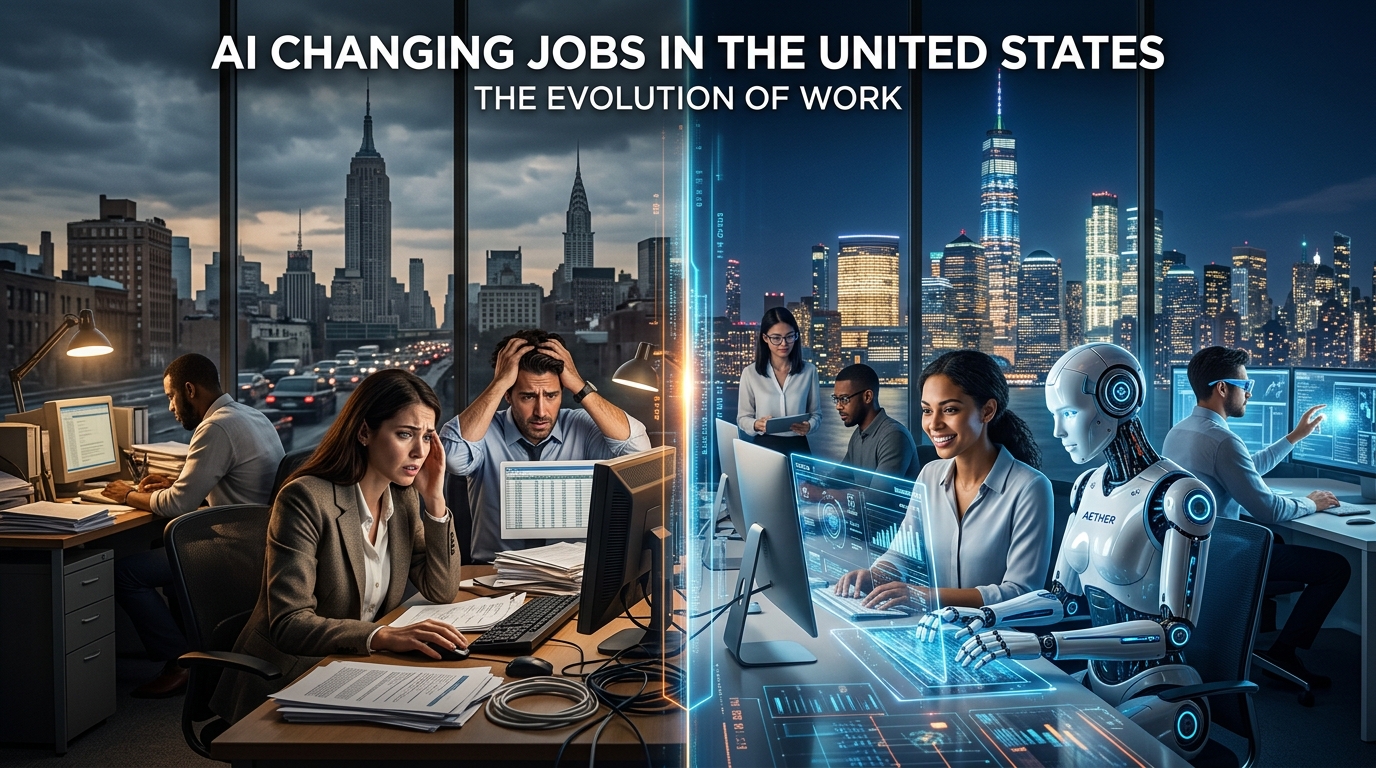

AI changing jobs in the United States is no longer a future prediction.Artificial Intelligence used to feel like science fiction. A few years ago, most Americans saw AI as something connected to robots, futuristic movies, or Silicon Valley experiments. Today, it has quietly become part of everyday work life. From customer service chatbots to AI-generated reports and automated hiring systems, AI is already reshaping the American workforce faster than many expected.
What makes this moment different is not just the technology itself. It is the speed. Businesses across the United States are adopting AI tools to reduce costs, increase productivity, and stay competitive. Employees are feeling both excitement and uncertainty. Some workers see AI as a powerful assistant that saves time. Others worry it could replace their jobs entirely.
The truth is somewhere in the middle.
AI is not simply eliminating jobs. It is changing the nature of work. Some roles are disappearing, many are evolving, and entirely new careers are emerging. The United States is entering a major workplace transformation similar to the Industrial Revolution or the rise of the internet.
How AI Changing Jobs at Workplace
Walk into almost any modern workplace in America today and you will likely find AI somewhere in the process.
Marketing teams use AI to write ad copy and analyze customer behavior. Banks use machine learning to detect fraud. Hospitals use AI tools to help doctors identify diseases faster. Retail companies use predictive algorithms to manage inventory and recommend products to customers.
Even small businesses are adopting AI-powered software because it saves time and money.
The biggest shift is not necessarily physical robots replacing workers. Instead, AI is automating repetitive mental tasks. Tasks that once required hours of manual effort can now be completed in minutes.
This includes:
- Data entry
- Scheduling
- Basic customer support
- Content generation
- Report summaries
- Email drafting
- Market analysis
- Administrative work
Many employees are discovering that AI acts more like a digital coworker than a machine. It handles repetitive tasks while humans focus on strategy, creativity, and decision-making.
Best AI Tools & Software in 2026 – FutureTechHive
Jobs Most Likely to Be Affected by AI
Not every profession faces the same level of disruption. Jobs built around predictable and repetitive tasks are the most vulnerable.
How AI Changing Jobs Customer Service Roles
Many companies in the United States are replacing basic support systems with AI chatbots. Customers can now get answers instantly without speaking to a human representative.
While complex issues still require human interaction, companies need fewer entry-level support agents than before.
How AI Changing Jobs Administrative and Clerical Jobs
AI scheduling assistants, document processors, and automated bookkeeping software are reducing the need for manual office tasks.
Administrative professionals are now expected to manage AI systems rather than perform repetitive paperwork themselves.

How AI Changing Jobs Manufacturing and Warehousing
Automation has already transformed factories for years, but AI-powered robotics are taking efficiency even further. Smart machines can now analyze production problems, predict maintenance needs, and improve supply chain management.
This means fewer low-skill factory jobs but greater demand for technicians and AI system operators.
How AI Changing Jobs Content and Media Industries
Writers, graphic designers, and video editors are seeing rapid changes because generative AI can create content in seconds.
However, human creativity still matters. Businesses increasingly want professionals who can guide AI tools effectively rather than simply create everything manually.
Top 5 AI content tools for bloggers
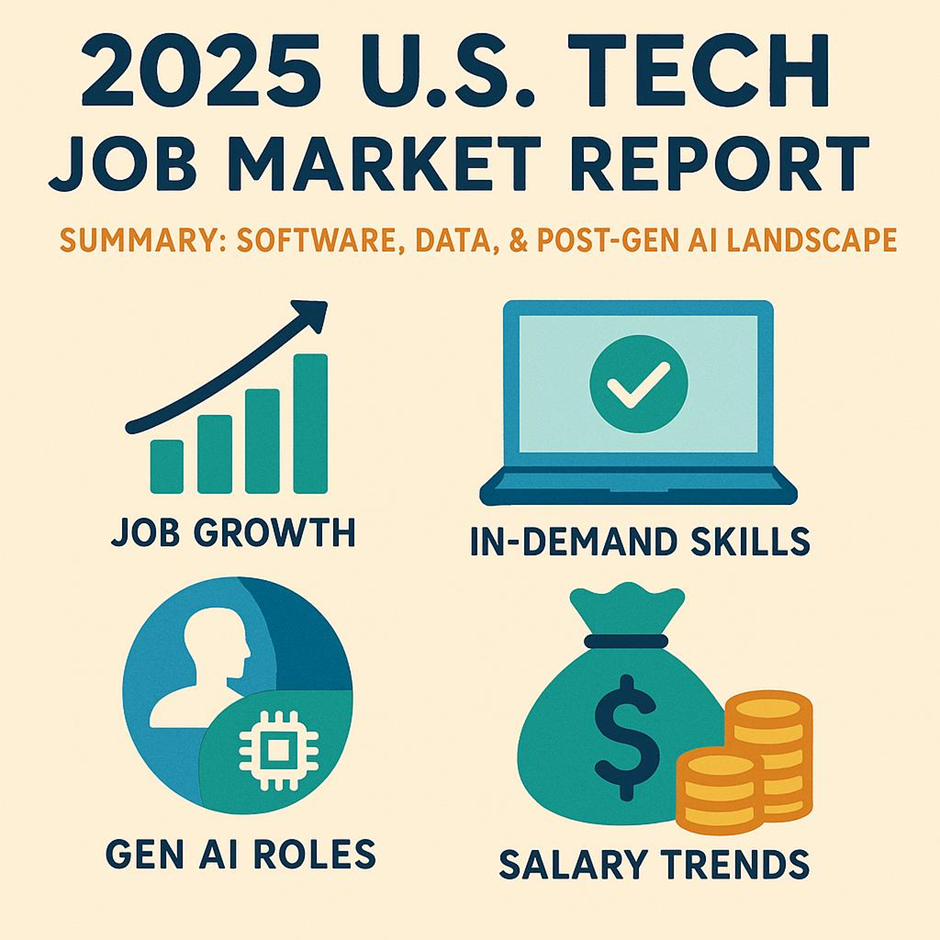
https://www.redglobal.com/news-blog/the-us-tech-job-market-unveiled-
New Jobs AI Is Creating
While headlines often focus on jobs being lost, AI is also creating entirely new career opportunities.
The United States is seeing growing demand for:
- AI engineers
- Prompt engineers
- AI ethics consultants
- Machine learning specialists
- Data analysts
- Automation consultants
- Cybersecurity experts
- AI content strategists
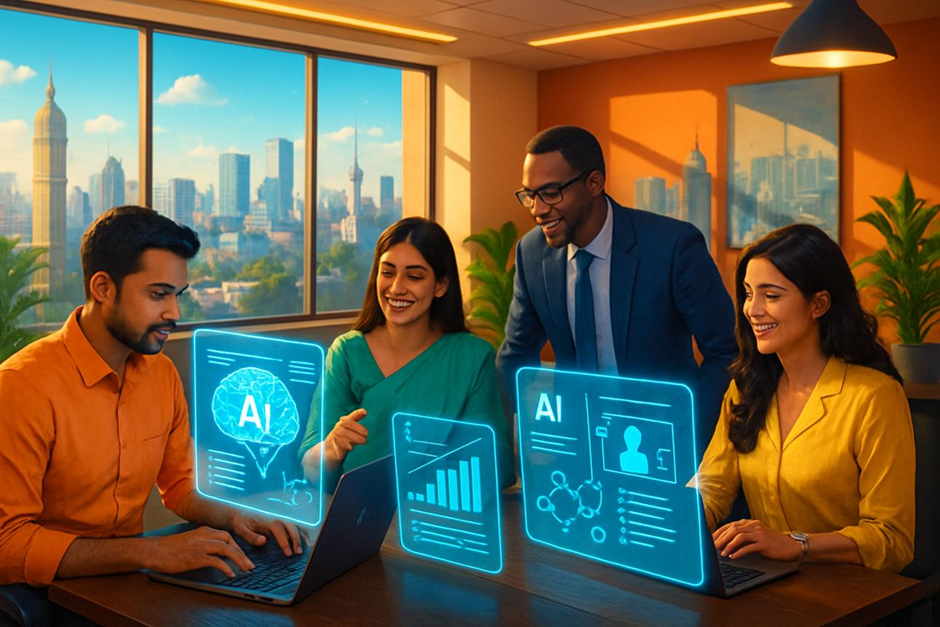
Businesses need people who understand both technology and human behavior. AI tools still require human oversight, training, and decision-making.
For example, companies now hire professionals specifically to train AI systems, improve prompts, and monitor AI-generated content for accuracy.
This shift shows an important reality: workers who adapt to AI often become more valuable, not less.
How AI Is Changing Jobs (The Rise of Human + AI Collaboration)
One of the biggest misconceptions about AI is that machines will completely replace humans. In reality, the most successful workplaces are becoming partnerships between humans and AI systems.
Think about doctors using AI to detect diseases faster. The AI assists with analysis, but the doctor still makes the final decision. Lawyers use AI to review documents quickly, but human judgment remains essential.
Even creative industries are evolving this way.
A marketing professional may use AI to generate ideas, but emotional storytelling, branding, and strategy still depend heavily on human insight.
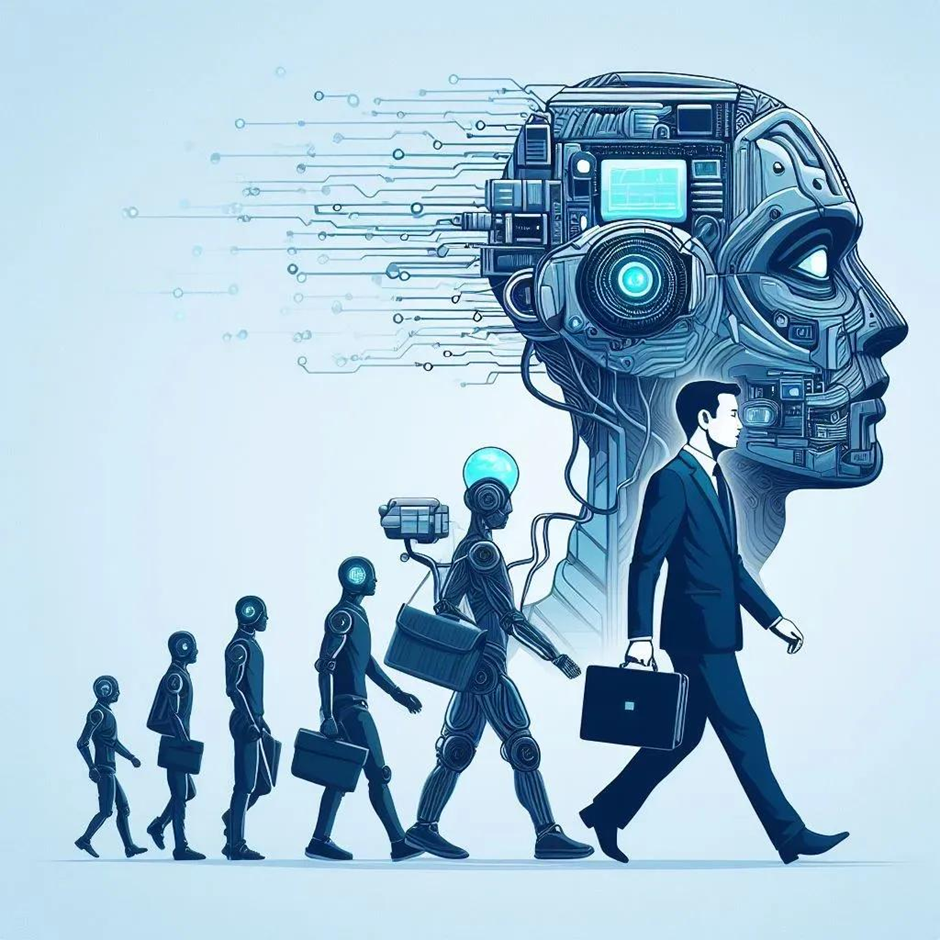
The future of work in the United States is likely not “AI versus humans.” It is “humans using AI better than others.”
Workers Are Feeling Both Hope and Anxiety
Across America, employees are experiencing mixed emotions about AI.
Some workers love how AI reduces repetitive tasks and improves productivity. Others fear job displacement and uncertainty about the future.
A major concern is that many employees feel unprepared for this transition. Schools and universities are still catching up with AI education, while technology continues moving rapidly.
Older workers especially worry about adapting to new digital systems. Younger generations may feel more comfortable with AI tools, but they also face intense competition in a rapidly changing job market. The emotional impact of AI on workers should not be ignored. Job identity is deeply connected to confidence, stability, and purpose. Any major technological shift naturally creates stress.
Why AI Skills Are Becoming Essential
In today’s job market, understanding AI is quickly becoming as important as understanding computers or the internet once was.
Employees who learn how to work alongside AI tools gain a significant advantage.
This does not mean everyone must become a software engineer. Basic AI literacy can already improve career opportunities in fields like:
- Marketing
- Healthcare
- Education
- Finance
- Real estate
- Human resources
- Journalism
- Sales
Companies increasingly value workers who know how to use AI efficiently while maintaining human creativity and critical thinking.
The workers most at risk are often those who resist adaptation completely.
The Economic Impact on the United States
AI could dramatically reshape the American economy over the next decade.
Supporters believe AI will increase productivity, reduce business costs, and create economic growth. Companies that adopt AI efficiently may become more profitable and innovative.
Critics worry about widening inequality.
Highly skilled workers who understand AI may earn more money, while low-skill jobs could decline significantly. This creates concern about income gaps and long-term workforce stability.
Some economists believe the government may eventually need stronger worker retraining programs to help Americans transition into new careers.
The challenge is not just technological. It is social and economic.
How the United States manages this transition may determine whether AI becomes a tool for shared prosperity or increased inequality.
Education Must Evolve Quickly
One major lesson from the AI revolution is that traditional education models are changing.
Students today need more than memorization skills. They need adaptability, problem-solving ability, communication skills, and digital literacy.
Many schools and universities are beginning to introduce AI-related programs, but the pace remains uneven.
Workers can no longer assume one degree will support an entire lifetime career. Continuous learning is becoming essential.
Online courses, certifications, and self-learning platforms are now critical for career survival in the AI era.
Small Businesses Are Also Benefiting from AI
AI is not only helping giant corporations. Small businesses across the United States are using AI tools to compete more effectively.
A small marketing agency can now automate content creation. Local retailers use AI analytics to predict customer behavior. Entrepreneurs use AI chatbots to handle customer inquiries 24/7.
This gives smaller companies access to capabilities that were once only available to large corporations.
For many entrepreneurs, AI is acting like an affordable digital employee.
The Future of Jobs in America
Nobody can predict the future perfectly. However, one thing is becoming clear: AI will continue changing how Americans work.
Some careers will disappear. Others will evolve. Many new professions will emerge that do not even exist today.
The workers who succeed in this new environment will likely be those who remain flexible, curious, and willing to learn.
Human qualities such as creativity, emotional intelligence, leadership, and critical thinking still matter deeply. In fact, they may become even more valuable as automation handles routine tasks.
AI is not just a technology story. It is a human story about adaptation, resilience, and the changing meaning of work in the United States.
Conclusion
Artificial Intelligence is no longer a distant possibility. It is already transforming jobs, industries, and workplaces across the United States.
The conversation should not only focus on jobs being lost. It should also focus on how workers, businesses, and society can adapt intelligently to this shift.
Technology has always changed the workforce throughout history. AI is simply the newest chapter. The real question is not whether AI will change jobs in America. The real question is how prepared we are to evolve alongside it.
Those who learn, adapt, and embrace AI responsibly may find themselves better positioned for the future than ever before.